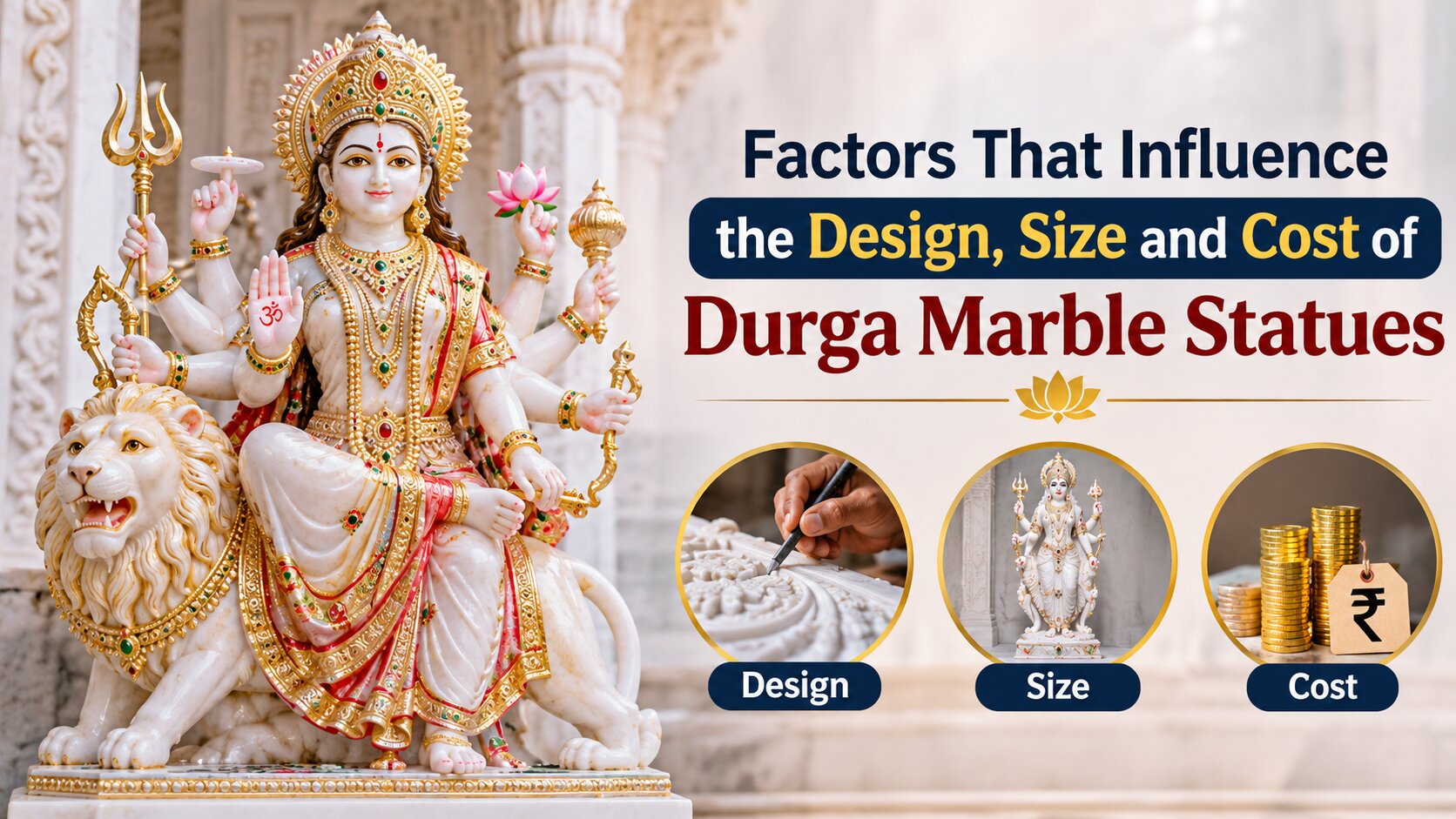
Factors That Influence the Design, Size and Cost of Durga Marble Statues
A marble statue of Goddess Durga represents devotion, traditional Indian craftsmanship and artistic beauty. These statues are commonly installed in home temples, religious places, community spaces and large temples. From the facial expression of the goddess to the detailing of her ornaments, weapons and lion, every element contributes to the statue's overall appearance. However, choosing a suitable statue involves more than selecting an attractive design. Its size, marble quality, carving details, finishing and manufacturing process also influence the final cost.
Before purchasing a Durga Marble Statue, it is useful to understand the factors that determine its design, dimensions and price. This knowledge can help buyers select a statue that meets their religious requirements, available space and budget.
1. Quality and Type of Marble Used
The quality of marble is one of the most important factors affecting the appearance, durability and cost of a statue. Different types of marble have different textures, shades, grain patterns and levels of consistency.
White marble is widely preferred for Goddess Durga statues because of its clean appearance and suitability for detailed carving. Some buyers also choose marble with natural variations or particular shades to achieve a distinctive look.
The price of marble can depend on:
- Origin and availability of the stone
- Natural colour and surface consistency
- Texture and grain structure
- Strength and suitability for carving
- Overall quality of the selected block
High-quality marble with a consistent surface may be preferred for statues requiring fine facial features and intricate ornaments. The selection of suitable stone also helps sculptors achieve a better finish.
2. Size and Height of the Statue
The height and overall dimensions of a statue directly influence the quantity of marble required and the amount of work involved. Small idols generally require less material and carving time, while larger statues need bigger marble blocks, additional labour and more careful handling.
The size should be selected according to the location where the statue will be installed. A compact idol may be suitable for a home mandir, whereas a larger statue may be required for a temple, religious institution or public worship area.
Common size considerations include:
- Height of the statue
- Width and overall structure
- Base or pedestal dimensions
- Space required for installation
- Transportation and handling requirements
Buyers should measure the available installation area before placing an order. It is also important to consider the statue's base and surrounding space rather than focusing only on its height.
3. Design and Artistic Details
The design plays a major role in determining the visual appeal and manufacturing cost of a marble statue. Goddess Durga is traditionally represented with multiple arms, different weapons and a lion or tiger as her vehicle. The arrangement and detailing of these elements can vary according to the selected design.
Some statues feature a simple traditional appearance, while others include elaborate ornaments, decorative clothing patterns, detailed crowns and carefully carved facial expressions.
The design may include:
- Facial expressions and eye detailing
- Crown and jewellery patterns
- Multiple arms and hand positions
- Trishul, sword, chakra and other weapons
- Lion or tiger detailing
- Decorative clothing and pedestal designs
Intricate designs require greater attention, precision and carving time. Therefore, a statue with elaborate artistic details may cost more than a simpler design of similar dimensions.
4. Traditional Posture and Form of Goddess Durga
Goddess Durga is represented in different forms and postures in traditional Indian sculpture. Some statues show the goddess seated on a lion, while others depict her in a standing position or in the Mahishasura Mardini form.
Each posture has its own artistic requirements. A seated statue may need a carefully designed throne or pedestal, while a standing statue requires proper balance and proportion. Designs depicting the goddess with her lion and Mahishasura may involve additional sculpting work.
When selecting a durga mata mutri, buyers should consider the traditional form, posture and overall composition that suit their worship space. The design should also be selected according to the intended installation and personal preference.
5. Hand Carving and Craftsmanship
The skill of the sculptor has a significant influence on the final appearance and price of a marble statue. Skilled artisans carefully shape the marble, create facial features, carve ornaments and refine smaller elements.
Hand carving requires patience and experience, particularly when working on detailed religious sculptures. Small differences in facial expression, body proportions and decorative patterns can change the overall appearance of the idol.
The craftsmanship involved may include:
- Initial design and marking
- Rough shaping of the marble
- Detailed hand carving
- Refinement of facial features
- Decorative pattern development
- Final surface finishing
A statue that involves extensive hand detailing generally requires more working hours. This additional effort can influence its manufacturing cost.
6. Colour and Surface Finishing
The finishing of a marble statue affects its overall appearance. Some buyers prefer a natural white marble finish, while others select customised colours and decorative details.
Common finishing choices include smooth polishing, natural marble finishing and selected painted or coloured elements. The final choice depends on the design, installation location and buyer's preference.
Colour customisation may involve additional materials, skilled labour and finishing work. For this reason, a customised statue may have a different price from a standard white marble design.
Before finalising an order, buyers should discuss the expected finish and colour requirements with the manufacturer. This helps ensure that the final product matches the selected design as closely as possible.
7. Customisation Requirements
Customisation is another important factor affecting the design and cost of a marble statue. Buyers may require specific dimensions, facial features, ornament patterns, posture or decorative elements.
A customised idol can be created according to the available space and individual design preferences. However, changes to a standard design may require additional planning and carving work.
Customisation options may include:
- Specific height and width
- Different traditional postures
- Customised pedestal designs
- Special ornament patterns
- Selected marble shades
- Additional decorative details
A professional Marble Murti Manufacturer can help buyers understand which customisation options are practical for the selected marble and statue dimensions.
8. Manufacturing Time and Labour
The time required to manufacture a marble statue also influences its overall cost. A simple design may take less time to complete, while a large statue with multiple detailed elements can require considerably more work.
The manufacturing process may involve several stages, including marble selection, design preparation, rough carving, detailed sculpting, polishing and quality inspection.
The number of artisans involved and the level of expertise required can also affect production expenses. Buyers ordering customised or large statues should discuss the estimated completion time before confirming their requirements.
9. Transportation, Packaging and Installation
The final cost of a marble statue may also include expenses beyond manufacturing. Marble is a heavy material, and large statues require careful packaging and transportation to avoid damage.
The delivery cost can depend on the statue's dimensions, weight, destination and packaging requirements. Long-distance or international shipping may involve additional handling and logistics expenses.
For larger statues, buyers should also consider:
- Protective packaging
- Loading and unloading arrangements
- Transportation distance
- Delivery access at the destination
- Installation requirements
Discussing these arrangements in advance can help avoid unexpected expenses and make the purchasing process more convenient.
10. Choosing the Right Marble Statue Manufacturer
Selecting an experienced manufacturer is important for getting a statue that meets the expected design and quality standards. Buyers should review previous work, carving quality, available designs and customisation options before placing an order.
A reliable manufacturer should clearly explain the marble type, dimensions, finishing options, estimated price and delivery arrangements. It is also helpful to request photographs or videos of completed statues and discuss the design before manufacturing begins.
When comparing manufacturers, consider their experience in marble sculpture, attention to detail, communication and ability to handle customised orders. The lowest price may not always represent the best value if the quality or finishing does not meet expectations.
Conclusion
The design, size and cost of a Durga marble statue depend on several connected factors, including marble quality, carving details, posture, finishing, customisation and transportation. Understanding these elements helps buyers make informed decisions and select an idol suitable for their worship space and budget.
Before purchasing, compare the available designs, confirm the required dimensions and discuss the complete cost with the manufacturer. Careful planning and attention to craftsmanship can help you choose a beautiful marble statue that preserves the artistic and traditional significance of Goddess Durga for years.
Frequently Asked Questions
1. What factors affect the cost of a Durga marble statue?
The cost depends on marble quality, statue size, design complexity, hand-carving details, finishing, customisation and transportation expenses.
2. Does the size of a Durga marble statue affect its price?
Yes. Larger statues generally require more marble, additional labour and greater handling arrangements, which can increase the overall cost.
3. Which marble is commonly used for making Durga statues?
White marble is a popular choice because of its appearance and suitability for detailed carving. The final selection depends on the desired design, stone quality and budget.
4. Can I order a customised Durga marble statue?
Yes. Many manufacturers offer customisation options such as specific heights, postures, pedestal designs, ornament details and selected finishes.
5. How long does it take to make a marble Durga idol?
The manufacturing time depends on the statue's size, design complexity, carving requirements and finishing. Customised and highly detailed statues generally take longer to complete


